Key Takeaways
- Low-impact workouts are designed to reduce stress on the joints: At least one foot typically remains in contact with the ground during these activities.
- Low impact does not necessarily mean low intensity: Walking, cycling, swimming, and resistance training can still provide challenging workouts.
- These exercises can work for a wide range of fitness levels: Beginners, older adults, and those returning from injury often incorporate low-impact options into their routines.
- Low-impact training can support consistency: Activities that feel more manageable on the body may be easier to maintain over time.
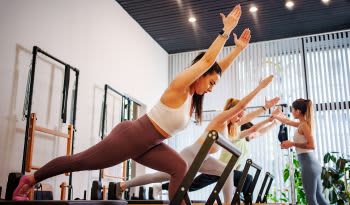
- Many forms of exercise fall into this category: Walking, yoga, Pilates, swimming, and elliptical workouts are among the common examples.
If you want to get more active but are concerned about your joints or your current fitness level, then low-impact workouts might be what you need. Many people associate exercise with the movements they did in gym class, like running or jumping jacks and burpees.
Although these high-impact exercises are excellent for your cardiovascular and bone health, they can also be stressful on your joints and intimidating for newbies or those returning to exercise after an extensive break. Low-impact exercise is any physical activity that avoids jarring, jumping, or other movements that cause sudden force on your body.
The good news is that low-impact workouts are incredibly beneficial for your health in several ways. You can still accomplish any fitness goal by sticking to movements that don’t aggravate existing issues or make you feel completely beat up by the end of your training session. Keep reading for more on the benefits of low-impact workouts, plus a sample workout plan.
Low Impact Workout Benefits
Improves heart health
You don’t need to run, jump, or jar the joints to get the benefits of exercise for your cardiovascular system. Any activity that increases your heart rate, whether vigorous house cleaning, walking, swimming, or low-impact aerobics, will improve heart health.
Consistent physical activity is solidly linked with reducing cardiovascular mortality and cardiovascular disease risk. People who keep active have lower blood pressure, higher insulin sensitivity, and better cholesterol levels.
Workout Tip: Research shows that walking without high-impact huffing and puffing is enough to significantly reduce cardiovascular disease risk—no need to pound the pavement to protect yourself from one of the leading causes of death.
Easy on your joints
Low-impact workouts are inherently easy on your joints. While it’s essential to keep in mind that higher-impact exercise can actually improve your joint health, sometimes medical conditions or physical conditioning dictate that those more intense workouts just aren’t accessible to you right now. Rather than avoiding exercise altogether, choose low-impact activities that support your health without aggravating your joints.
Workout Tip: Low-impact exercise is less likely to cause injury to your joint cartilage. Another way to reduce the impact on your joints is to build muscle, which decreases the loading on the joints, offering a protective effect.
Safe for those with back pain
Not only is low-impact exercise safe for most people with back pain, but it can also improve their pain and prevent it from worsening. Aerobic exercise helps relieve back pain by reducing stiffness and increasing the amount of nutrients flowing to the spine through your bloodstream. This increase in nutrients can speed healing and reduce inflammation.
Low-impact exercise still boosts your heart rate but doesn’t jar your spine or aggravate back pain, which is a win-win for those with back issues. Of course, ensure you are cleared for exercise by your doctor first.
Workout Tip: Research shows a combination of low-impact aerobic exercise, muscular strength, and flexibility training can reduce back pain by 52.5%.
Supports a healthy weight
Low-impact workouts support achieving and maintaining a healthy weight. Weight balance depends on burning the correct number of calories to offset what you eat. And while you may have heard that high-intensity exercise is superior for weight loss, these claims have been vastly overstated.
While high-intensity exercise can burn more calories in a shorter time, they are also much more difficult to sustain, and you shouldn’t do it every day; they are just too taxing. Conversely, low-impact exercise is ideal for doing daily, which can add up to a much higher number of calories burned over time.
Workout Tip: There’s nothing magical about HIIT, so choose lower-impact and intensity workouts if you prefer. A review of over 100 studies on exercise and weight loss shows no difference in weight, fat, and visceral loss rates between aerobic and high-intensity interval training as long as the calorie burn is the same.
Increases brain function
Regular physical activity can improve brain function, reducing the risks of cognitive decline and dementia. Research on exercise and brain health shows that low-impact, low-intensity training provides incredible benefits for brain function.
What’s more, low-impact exercise is highly advantageous compared to no exercise at all. So, if you cannot perform anything other than low-impact workouts, you’ll still knock your risk of dementia down by a substantial 30%.
Workout Tip: Taking 60-minute walks three times per week for six months provides benefits such as improved attention, visuospatial function, memory, executive function, cardiorespiratory fitness, lower body strength, and dynamic balance.
Sample Low-Impact Workout Plan
Taking the research-backed information into account, you can use the following weekly low-impact workout plan to boost your strength, physical functioning, brain and heart health, while reducing the chances of aggravating any joint or back pain and supporting a healthy weight.
Keep in mind that these are ideas, and you can alter or substitute the plan as you wish. Ensure you are cleared for physical activity by your health care provider before you start.
- Monday: 30 to 60-minute walk.
- Tuesday: 30-minute full body strength training workout; 15-minute walk.
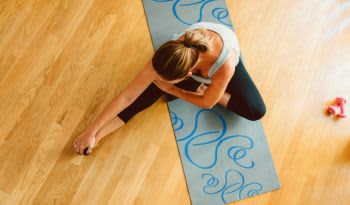
- Wednesday: Flexibility and mobility training (yoga, general stretching, active stretching)
- Thursday: 30-minute full body strength training workout; 15-minute walk.
- Friday: Flexibility and mobility training; 30 to 60-minute walk.
- Saturday: Fun, active hobby such as pickleball, gentle hike, bike ride, or gardening.
- Sunday: Active chores such as housecleaning, gardening, etc.
References:
- Bellicha, A., van Baak, M. A., Battista, F., Beaulieu, K., Blundell, J. E., Busetto, L., Carraça, E. V., Dicker, D., Encantado, J., Ermolao, A., Farpour‐Lambert, N., Pramono, A., Woodward, E., & Oppert, J.‐M. (2021). Effect of exercise training on weight loss, body composition changes, and weight maintenance in adults with overweight or obesity: An overview of 12 systematic reviews and 149 studies. Obesity Reviews, 22(Suppl 4), Article e13256.
- Johansson, M. S., Søgaard, K., Prescott, E., Marott, J. L., Schnohr, P., Holtermann, A., & Korshøj, M. (2020). Can we walk away from cardiovascular disease risk or do we have to ‘huff and puff’? A cross-sectional compositional accelerometer data analysis among adults and older adults in the Copenhagen City Heart Study. International Journal of Behavioral Nutrition and Physical Activity, 17(1), Article 85.
- Kang, S.-J., Kim, B.-H., Lee, H., & Wang, J. (2021). The beneficial effects of cognitive walking program on improving cognitive function and physical fitness in older adults. Healthcare, 9(4), Article 419.
- Nystoriak, M. A., & Bhatnagar, A. (2018). Cardiovascular effects and benefits of exercise. Frontiers in Cardiovascular Medicine, 5, Article 135.
- Sandmeier, R. H. (2000). Osteoarthritis and exercise: Does increased activity wear out joints? Journal of Athletic Training, 35(1), 62–65.
DISCLAIMER:
These statements have not been approved by the Food and Drug Administration. These products are not intended to diagnose, treat, cure, or prevent disease.


























































 Table of Contents